A diagnostic criteria for Exposure Anxiety?
 Â I have done consultations with those who fit Exposure Anxiety since 1996 and still do online consultations with those wanting to manage this highly problematic condition. This is a snip from an upcoming abridged version of my book, Exposure Anxiety: The Invisible Cage.
 I have done consultations with those who fit Exposure Anxiety since 1996 and still do online consultations with those wanting to manage this highly problematic condition. This is a snip from an upcoming abridged version of my book, Exposure Anxiety: The Invisible Cage.
If there were a diagnostic criteria for EA it might fit this:
A. Present from birth or infancy and persists throughout the person’s life span.
B. A marked and persistent aversion to directly confrontational attempts by even familiar others to share joint activities, communicate directly or cause self awareness, escalating from aversion to diversion, to retaliation responses. (Note: this could also be present in abused children, those with attachment disorders, and those with information processing disorders, sensory perceptual disorders, sensory hypersensitivities or sensory deficits).
C. Involuntary avoidance, diversion and retaliation responses revolving around basic self help skills and toileting even in the absence of any social audience. May later be accompanied by a tendency to mirror others when they are doing these things (can’t do as oneself) or to attribute responsibility to others or to objects to achieve these things (can’t do for oneself).
D. A social style ranging from self isolation to seemingly aimless wandering to highly active, even sometimes seemingly socially threatening approach-avoidance behaviours.
E. A communication style which may include any range of the following:
-
Selective Mutism, mindless (even self-hypnotic) singing or self chatter.
-
Short, telegraphic bursts of speech.
-
Whispered, self directed, rushed or overly slowed speech to the point of being incomprehensible.
-
Highly characterised stored utterances or scripts.
-
Persistently impulsive communications which are offensive or distancing.
-
Obsessive anxiety-driven descriptive or intellectual litanies.
-
Typed communication or artistic expression far beyond what the person can express directly or verbally.
Note: Provided these are not better accounted for by Tourette’s tics, Semantic Pragmatic Language Disorder, Aphasias, verbal agnosias, Social-Emotional Agnosia, personality or conduct disorders, Alexithymia, or other mood or anxiety disorders.
F. Exposure to uninvited praise and attention provokes immediate avoidance, diversion or retaliation responses. By mid-late childhood these EA responses may have differentiated into strategies of ‘can’t do as oneself’, ‘by oneself’ or ‘for oneself’ in which praise and attention are tolerated when the person has assumed a role or character but not when they are caught off guard or when being themselves.
G. A phase in early childhood where there is no remorse for involuntary avoidance, diversion or retaliation responses but by mid childhood-puberty, self directed rage may result from progressive awareness of their own condition and desire but inability to escape it.
H. Avoidance, diversion and retaliation responses or strategies of ‘can’t do as self’, ‘can’t do by self’ or ‘can’t do for self’ significantly interfere with the person’s ability to cope with change, transitions, demonstration of academic learning and skills, ability to function in employment, ability to gain or sustain general friendships, manage healthy parenting or sustain long term intimate or sexual relationships.
G. Involuntary avoidance, diversion and retaliation responses and depersonalisation strategies of ‘can’t do as self’, ‘can’t do by self’ or ‘can’t do for self’, are not due to the direct physiological effects of any substance or other general medical condition and are not better accounted for by abuse or by other anxiety, conduct, personality, developmental, attention deficit, dissociative, attachment, mood or compulsive disorders.
Given EA is present from birth or infancy, can present in both mild and severe forms, in specific or generalised forms, and may shift dramatically in some people by late childhood or adulthood, which well known public figures might have had a degree of EA? Would love to hear your suggestions.
here’s some of mine:
Boyle, Susan (Scottish singer)
Bukowski, Charles (American poet/author)
Dickinson, Emily (American poet)
Garbo, Greta (American actress)
Hannah, Darryl (American actress)
Jackson, Michael (American singer-songwriter)
Lewis, Daniel Day (American actor)
Lucas, Isabel (Australian actress and activist)
Morrison, James (British singer-songwriter/poet)
Morrison, Van (Irish singer-songwriter)
Sellers, Peter (British actor/director)
Williams, Robin (American actor/comedian)
Woolf, Virginia (British novelist, essayist)
Donna Williams, Dip Ed, BA Hons.
Author, artist, singer-songwriter, screenwriter.
Autism consultant and public speaker.
You can find more info at my website http://www.donnawilliams.netincluding my consultation pages for both Autism and DID.
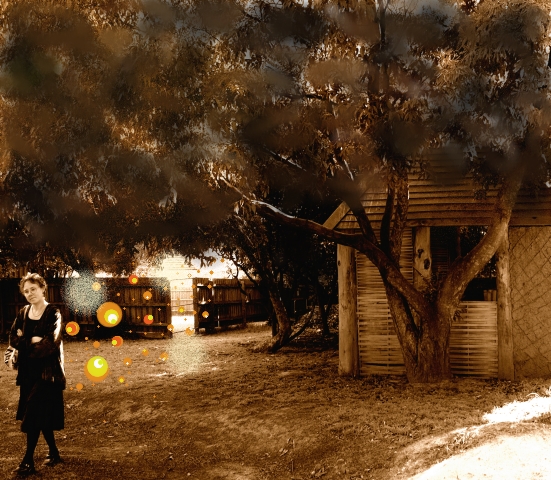
I think Greta Garbo might have had exposure anxiety, and so did Stanley Kubrick.
I think Stanley Kubrick was had the Solitary personality trait which allowed him to be an extreme rationalist and to be capable of sudden and total detachment from someone he’d previously been quite warmed to, such as his friendship with Malcolm Mc Dowell. But someone with EA would likely not easily have entertained so many visitors to his home at a time, and whilst many with EA relate better to animals than people, most would have struggled to keep company with so many dogs at once. Kubrick’s photos display a solitary personality but not one with EA.
Hi Donna,
EA is such an interesting concept.
I was recently talking with a non-spectrum friend who considers she has EA and it’s something we have both noticed alot with many of our ‘actor’ or ‘performer’ friends. They are the ones who are ALWAYS in character.
So I’m pondering how common it could be with those in ‘acting’ type careers.
Yip, Michael Jackson, surely.
Mine is getting better by the way!
Paula 🙂
Yes, in fact drama and puppets are one of the things which have helped people with EA, but yes, then they can’t get off the stage. But Darryl Hannah seems to have struck the balance.
I’m surprised people are suggesting Leonardo Da Vinci, Einstein, Bill Gates, Mozart, Beethoven. These guys must have been snapped up by every group which ever wanted a member. Einstein spoke late and was an idiosyncratic personality, Bill Gates may resemble Obsessive Compulsive Personality Disorder, Da Vinci was a polymath, Mozart developed cocaine addiction and mania, Beethoven was a masterful pianist who went deaf. Just because people are happy to snap these guys up as ‘autistic’ (really? go figure) doesn’t mean they fitted EA in any way.
Around 30% of children with autism may have mild-severe EA, and its suspected to be a higher percentage in those with Fragile X. So EA otherwise can occur with or without ASD and vice versa.
But do keep the suggestions flowing.
Scary I fit so much of that, but seem to fit a lot of many things, guess a real fruit salad mix!
Yeah, I’ve just finished a 10th book, an abridged version of the EA book with an extensive chapter on the differences between EA and a range of look alikes.
it’s with JKP and should be out by 2010
I am not a big book reader as you know, but will definitely but that one…
Book sounds great I will be one of the first to read it…
I think theres a few of us out here who suffer EA!!!
I personally find it a very useful idea and it has helped me understand alot about myself- plus, in a way that doesn’t make me feel as if I am simply a ‘morally bad person’ (as I think the outside presentation of EA can be interpreted as ‘deliberate’ or ‘manipulative’).
Donna, I was thinking the other day how helpful this idea could be to many non-autistic spectrum people who clearly have these difficulties. I am quite sure that a number of ‘normal salad’ people I know have these problems and could benefit from understanding how they could overcome it.
Does your new book discuss EA in people who do not have ‘autistic salad’?
yes.
[…] in the direction of someone already so public, so exposed. Two weeks ago I listed him on my blog in an article on Exposure Anxiety in which I listed famous people who may have had Exposure Anxiety and I wondered how any of those […]
imagine feeling ALL of that anxiety AND being basically non-verbal. My 9 yr. old’s world breaks my heart everyday
Hi Jane, but take heed that even if someone with severe EA had functional verbal speech, severe EA would still render them constantly frozen out of expression, spouting involuntary diversions, or spouting the opposite to their intended expression. Typed speech, however, is often still a freed up avenue. Could be worth looking at Facilitated Communication with a view to progressive independant typing.
Aah! So that’s what my constant state of anxiety is all about…I’ve been aware that I feel it in the presence of most people, even those I know quite well, including counsellors. I think this all goes back to having a birthing or other early childhood experience where we were shocked out of our skins. Why we look like ‘stunned mullets’, and why we feel fear and anxiety around other people.
I’ve just recognised another ‘stunned mullet’ – country music singer John Williamson. In recent newspaper pix his face has that vacant, frozen Aspie look and his body is rigid and wooden. I wonder if he knows…